Wow, that was really a great video. I really enjoyed the fact that it was both full of things to learn, but easy to understand at the same time. I also liked that they didn't make the pictures the star of the whole video, but they provided a really good visual aid that made the video more fun and upbeat, which made me more excited about what the video had to teach me. I'm really happy I was able to learn that I didn't really know how evolution worked... now I know, and hopefully I can educate other people so that they can know too! Overall, I really enjoyed this video (thank you Emmie) and I'm happy that I could watch it.
This was a cool video. I admit that I did believe in the myths they talked about before I watched the video. I still am a bit confused. After all, say one organism had a genetic mutation. It seems unlikely that someday every kind of that organism would have the same genetic mutation. It makes more sense to think that some of the organism evolved to have the gene, but still others stayed the same, like the case with humans and apes. Humans have split off from apes over time, but apes still exist in their previous form. Now that I know the truth about evolution, it makes me wonder things like, what will humans evolve to become next? Is it possible that we will turn back into apes over time? Overall I thought the video was really good, but the way they explained it confused me a little. However, it was good enough so that it could give me an understanding of what evolution is.
Thank you Emmie for leaving behind this very thought-provoking article. I think it's funny that the most famous philosophers & scientists of many generations ago are being proved wrong by other scientists & philosophers of this generation. With all of the new technology around, I think it's so cool to have different theories than the ones which have been around for hundreds of years. I learned that giraffes who spent their lives stretching their necks do not give birth to children that end up having their necks longer than their parents. Instead, random genetic mutations cause some giraffes to be born with longer necks, and that gives them a better chance to survive than the ones who weren't so lucky. That misconception was made by a famous scientist & philosopher, Lamarck. I also learned that a quote by another scientist & philosopher, "Survival of the Fittest" is not necessarily true either. It all is evidence proving that technology is a major tool among scientists, philosophers, students, and even normal people in this generation of life.
This video was pretty cool. It was interesting to learn about how genes are very random, so animals could end up with a variety of features. It was also interesting to learn that even though some animals may be weak and not live very long, they still pass on their genes, and sustain their population by reproducing often. I give this article a 10 out of 10!
I think that this video is really cool. I think that it is interesting that people don't get genes from there parents. This is something that I always thought was correct, so to find out is is wrong is cool. If that is the case then why do family members look the same? I would give this article an A.
I think that this video is really cool. I think that it is interesting that people don't get genes from there parents. This is something that I always thought was correct, so to find out is is wrong is cool. If that is the case then why do family members look the same? I would give this article an A.
I found this article very interesting. I will admit that I always thought that "Evolution is organisms adapting to their environment." I thought that it was cool that if you were a genetic mutation, you could actually become "better" than your peers. This gave an advantage, and therefore a better chance of survival, for those lucky indivisuals.
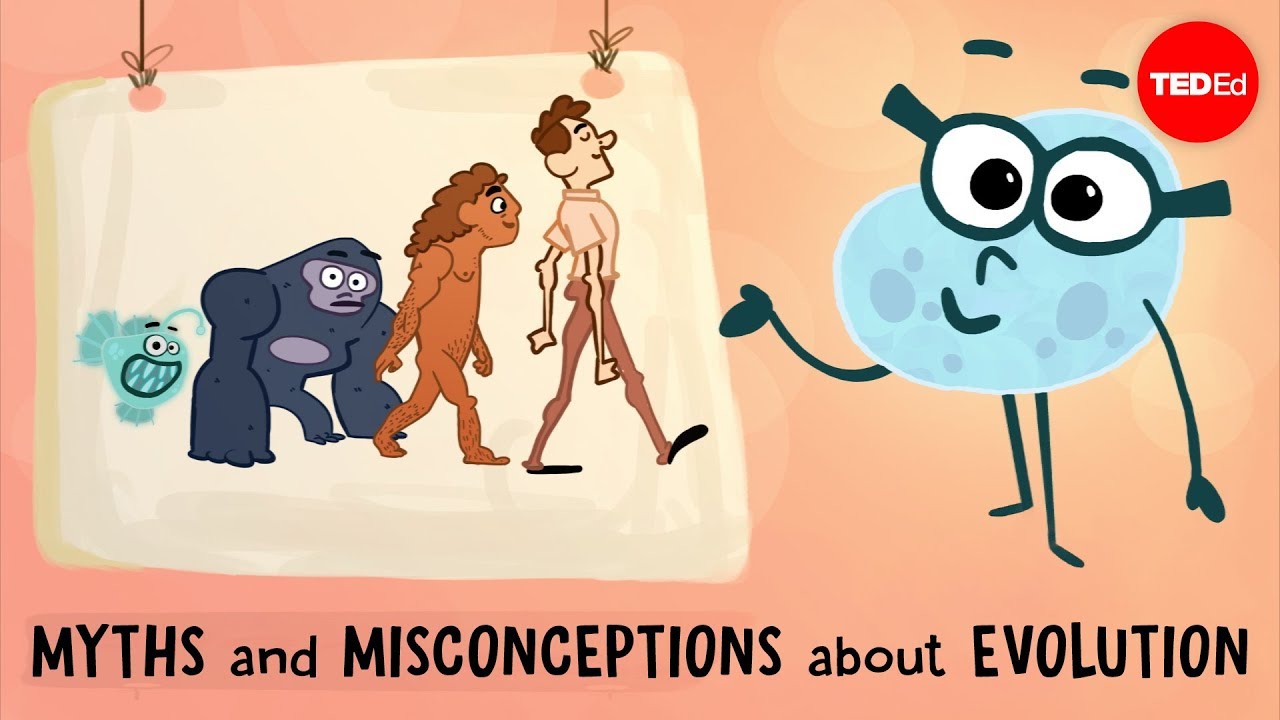
Wow, I think this video is really cool. I learned a lot, when the video mentions Lamarck I have never heard of that scientist. I have only heard of Darwin. I also learned it depends on the genes a person or animal get. For example, if a person's mother is short, it doesn't mean the child will be short do. It all depends on genes and what genes people get. At the end of the video, when it when from a ape to a caveman to a human I wonder what genetic form will come next? Maybe people who have extra toes or fingers are the evolution to what the next human is going to look like.
This was a really cute/ cool TedX talk. It taught me about somethings that I didn't know that much about. I thought that this was cute because of the animations and the narration. I loved this video because of the cute graphics, and the fact that it actually taught me. When the video mentioned Lamarck, I had no idea that this was a real person. I had never heard of him before. I only knew about Darwin. Like Sara! At the end of the video I loved how they did cartoon comparisons of the different kind of people now and then. I thought that it was cool and cute that the animation showed us change over time. Overall, I give this video a 10 out of 10 stars.
This video really gave me another perspective on 'natural selection'. I always thougth that evolution is organisms adapting to thier environment. Now, I understand that the genes of creatures don't change beucase they know what the creature needs to survive. They change with genetic mutations. That's really cool! Also, I learned about Lamarck. Like Ally and Sara, I had never before heard about him. The video also clarified what Survival of the Fittest means. That was really helpful. Overall, I would reate this video a 9.5 out of 10 stars because of its useful information, cool pictures and graphics, and cut narration.
That was a very interesting video. I think it's better to watch a video personally than to read an article because the video gives a sense of humor and entertainment. Back to the article, I learned lots of things about evolution, and how animals change with genetic mutations. Also I
sorry about that pressed send by accident, and wrote my name, anyway back to the thing. Also I did learn that an animal's environment means a lot in terms of which animal is at the advantage. I rate this article a 10 out of 10 because it is educational, has cool pictures and graphics, and a sprinkle of humor.
sorry about that pressed send by accident, and wrote my name, anyway back to the thing. Also I did learn that an animal's environment means a lot in terms of which animal is at the advantage. I rate this article a 10 out of 10 because it is educational, has cool pictures and graphics, and a sprinkle of humor.
I love these cool videos people find. TED Ed is great! This video was very interesting, although I have heard almost all of it before. I thought that when they talked about how genes can mutate into anything was really cool because it seems like most animals are pretty much the same. Again, great video.
I really enjoyed this video. I used to think that evolution would just happen in a certain amount of time, but I was wrong. Watching this had made me much more interested in how people and other species evolved. I have known about Darwin, but I didn't know how much he was wrong about evolution. Overall, this was a very informative video. It is also great for teachers to show their students, because of the cartoon aspect. Thank you so much Emmie for the amazing video, I am very excited to learn more about evolution.
This was a great video. Surprisingly, many people today still believe Lamarck's theory. I think the reason behind this is that to me, even though I know Darwin's theory is correct, Lamarck's still seems to make more sense. However, no one has ever found a mechanism that makes giraffe's necks long by stretching the neck to reach high-up food, and definitely not to change the DNA of a giraffe in a way that it would pass on to its offspring. However, there is a mechanism for random genetic mutations to pass DNA on to an animal's offspring.
This was a great video. Surprisingly, many people today still believe Lamarck's theory. I think the reason behind this is that to me, even though I know Darwin's theory is correct, Lamarck's still seems to make more sense. However, no one has ever found a mechanism that makes giraffe's necks long by stretching the neck to reach high-up food, and definitely not to change the DNA of a giraffe in a way that it would pass on to its offspring. However, there is a mechanism for random genetic mutations to pass DNA on to an animal's offspring.
I would've never thought that all these myths I thought were true, aren't. The facts that genes don't want to make copies of themselves was to me, fascinating because I wouldn't have thought of that among other topics that she briefly mentioned. If I think about what was said in this article, it really makes sense and almost makes me feel like I should've realized that organisms change their features because they adapt. Furthermore, organisms would have never evolved like what it is like today if they always stayed in the same environment that never changed. What would have happened if organisms were unable to adapt? Anyhow, I'm getting a little off topic. I was wondering if organisms kept on adapting like they have in the past millions of years, will there be species that are completely different? Or will there still be humans like how an animal slowly evolves into an other kind of animal, but can both organisms still exist? What if only the best survive and then some kinds of organisms will become extinct to the point where there could never be another this or that? I'm really curious, but it would take a very, very, very, very, very, long time before we evolved into robots for an example. That is probably because right now that would be perceived as impossible, but in a few trillion years there might be slight possibility that in another few billion years that it will be possible. I really enjoyed attaching this video!

19 comments:
Wow, that was really a great video. I really enjoyed the fact that it was both full of things to learn, but easy to understand at the same time. I also liked that they didn't make the pictures the star of the whole video, but they provided a really good visual aid that made the video more fun and upbeat, which made me more excited about what the video had to teach me. I'm really happy I was able to learn that I didn't really know how evolution worked... now I know, and hopefully I can educate other people so that they can know too! Overall, I really enjoyed this video (thank you Emmie) and I'm happy that I could watch it.
This was a cool video. I admit that I did believe in the myths they talked about before I watched the video. I still am a bit confused. After all, say one organism had a genetic mutation. It seems unlikely that someday every kind of that organism would have the same genetic mutation. It makes more sense to think that some of the organism evolved to have the gene, but still others stayed the same, like the case with humans and apes. Humans have split off from apes over time, but apes still exist in their previous form. Now that I know the truth about evolution, it makes me wonder things like, what will humans evolve to become next? Is it possible that we will turn back into apes over time? Overall I thought the video was really good, but the way they explained it confused me a little. However, it was good enough so that it could give me an understanding of what evolution is.
Thank you Emmie for leaving behind this very thought-provoking article. I think it's funny that the most famous philosophers & scientists of many generations ago are being proved wrong by other scientists & philosophers of this generation. With all of the new technology around, I think it's so cool to have different theories than the ones which have been around for hundreds of years. I learned that giraffes who spent their lives stretching their necks do not give birth to children that end up having their necks longer than their parents. Instead, random genetic mutations cause some giraffes to be born with longer necks, and that gives them a better chance to survive than the ones who weren't so lucky. That misconception was made by a famous scientist & philosopher, Lamarck. I also learned that a quote by another scientist & philosopher, "Survival of the Fittest" is not necessarily true either. It all is evidence proving that technology is a major tool among scientists, philosophers, students, and even normal people in this generation of life.
This video was pretty cool. It was interesting to learn about how genes are very random, so animals could end up with a variety of features. It was also interesting to learn that even though some animals may be weak and not live very long, they still pass on their genes, and sustain their population by reproducing often. I give this article a 10 out of 10!
I think that this video is really cool. I think that it is interesting that people don't get genes from there parents. This is something that I always thought was correct, so to find out is is wrong is cool. If that is the case then why do family members look the same? I would give this article an A.
I think that this video is really cool. I think that it is interesting that people don't get genes from there parents. This is something that I always thought was correct, so to find out is is wrong is cool. If that is the case then why do family members look the same? I would give this article an A.
I didn't mean to post twice sorry.
I found this article very interesting. I will admit that I always thought that "Evolution is organisms adapting to their environment." I thought that it was cool that if you were a genetic mutation, you could actually become "better" than your peers. This gave an advantage, and therefore a better chance of survival, for those lucky indivisuals.
Wow, I think this video is really cool. I learned a lot, when the video mentions Lamarck I have never heard of that scientist. I have only heard of Darwin. I also learned it depends on the genes a person or animal get. For example, if a person's mother is short, it doesn't mean the child will be short do. It all depends on genes and what genes people get. At the end of the video, when it when from a ape to a caveman to a human I wonder what genetic form will come next? Maybe people who have extra toes or fingers are the evolution to what the next human is going to look like.
This was a really cute/ cool TedX talk. It taught me about somethings that I didn't know that much about. I thought that this was cute because of the animations and the narration. I loved this video because of the cute graphics, and the fact that it actually taught me. When the video mentioned Lamarck, I had no idea that this was a real person. I had never heard of him before. I only knew about Darwin. Like Sara! At the end of the video I loved how they did cartoon comparisons of the different kind of people now and then. I thought that it was cool and cute that the animation showed us change over time. Overall, I give this video a 10 out of 10 stars.
This video really gave me another perspective on 'natural selection'. I always thougth that evolution is organisms adapting to thier environment. Now, I understand that the genes of creatures don't change beucase they know what the creature needs to survive. They change with genetic mutations. That's really cool! Also, I learned about Lamarck. Like Ally and Sara, I had never before heard about him. The video also clarified what Survival of the Fittest means. That was really helpful. Overall, I would reate this video a 9.5 out of 10 stars because of its useful information, cool pictures and graphics, and cut narration.
That was a very interesting video. I think it's better to watch a video personally than to read an article because the video gives a sense of humor and entertainment. Back to the article, I learned lots of things about evolution, and how animals change with genetic mutations. Also I
sorry about that pressed send by accident, and wrote my name, anyway back to the thing. Also I did learn that an animal's environment means a lot in terms of which animal is at the advantage. I rate this article a 10 out of 10 because it is educational, has cool pictures and graphics, and a sprinkle of humor.
sorry about that pressed send by accident, and wrote my name, anyway back to the thing. Also I did learn that an animal's environment means a lot in terms of which animal is at the advantage. I rate this article a 10 out of 10 because it is educational, has cool pictures and graphics, and a sprinkle of humor.
I love these cool videos people find. TED Ed is great! This video was very interesting, although I have heard almost all of it before. I thought that when they talked about how genes can mutate into anything was really cool because it seems like most animals are pretty much the same. Again, great video.
I really enjoyed this video. I used to think that evolution would just happen in a certain amount of time, but I was wrong. Watching this had made me much more interested in how people and other species evolved. I have known about Darwin, but I didn't know how much he was wrong about evolution. Overall, this was a very informative video. It is also great for teachers to show their students, because of the cartoon aspect. Thank you so much Emmie for the amazing video, I am very excited to learn more about evolution.
This was a great video. Surprisingly, many people today still believe Lamarck's theory. I think the reason behind this is that to me, even though I know Darwin's theory is correct, Lamarck's still seems to make more sense. However, no one has ever found a mechanism that makes giraffe's necks long by stretching the neck to reach high-up food, and definitely not to change the DNA of a giraffe in a way that it would pass on to its offspring. However, there is a mechanism for random genetic mutations to pass DNA on to an animal's offspring.
This was a great video. Surprisingly, many people today still believe Lamarck's theory. I think the reason behind this is that to me, even though I know Darwin's theory is correct, Lamarck's still seems to make more sense. However, no one has ever found a mechanism that makes giraffe's necks long by stretching the neck to reach high-up food, and definitely not to change the DNA of a giraffe in a way that it would pass on to its offspring. However, there is a mechanism for random genetic mutations to pass DNA on to an animal's offspring.
I would've never thought that all these myths I thought were true, aren't. The facts that genes don't want to make copies of themselves was to me, fascinating because I wouldn't have thought of that among other topics that she briefly mentioned. If I think about what was said in this article, it really makes sense and almost makes me feel like I should've realized that organisms change their features because they adapt. Furthermore, organisms would have never evolved like what it is like today if they always stayed in the same environment that never changed. What would have happened if organisms were unable to adapt? Anyhow, I'm getting a little off topic. I was wondering if organisms kept on adapting like they have in the past millions of years, will there be species that are completely different? Or will there still be humans like how an animal slowly evolves into an other kind of animal, but can both organisms still exist? What if only the best survive and then some kinds of organisms will become extinct to the point where there could never be another this or that? I'm really curious, but it would take a very, very, very, very, very, long time before we evolved into robots for an example. That is probably because right now that would be perceived as impossible, but in a few trillion years there might be slight possibility that in another few billion years that it will be possible. I really enjoyed attaching this video!
Post a Comment