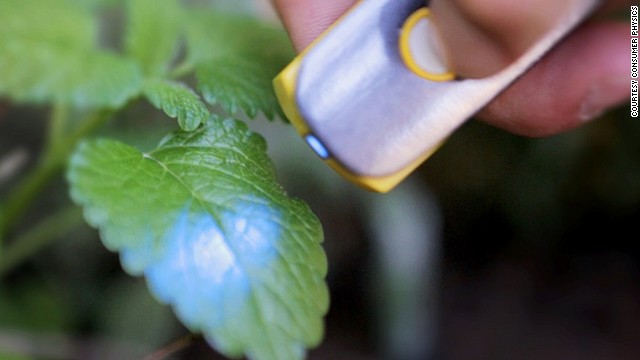
SCiO is a pocket molecular sensor that allows users to check the nutritional value of food, among other things
6 comments:
Shirell
said...
This article was really amazing. I would love to have the SCiO so that I could go to a party and eat everything while knowing what I've just eaten. I also think that this product has the potential to be very useful to people with diabetes, allergies, or eating disorders. These people would be able to use the Israeli product to check what they are about to eat on their phone. This will enable them to see if anything they cannot eat is in their food, or, if they have diabetes, to see if they will have to take extra insulin for their condition. When I go to a restaurant and see something I want to eat, I know that it would come in handy to know if anything I am allergic to may be in the meal. I have also started to wonder if this product could be developed for other purposes. This product could make blood testing much more efficient. For example, if this product had some changes made, could you not check your vitamin levels by pricking your finger? Overall, I think that this invention will prove to be very useful for future projects of other purposes.
This article was really interesting. This could help so many people with allergies, obesity, and so many others. I was also thinking that this technology could have been helpful in the old days when there were food testers for a king or something. This could have saved many lives back then. Although I think this is amazing, I think that the way that it is read could also be better. For example, the average person may not know how many calories are "good" also, does the sensor know how large the serving is? I mean, it may say 50 calories, for 5 ounces of honey, but if you're eating 60 ounces (of course the math would be harder), it might be hard to calculate. Also, there are some foods that are high in calories or fat, but are still good for you such as fruits and nuts. This technology might fool some people and actually cause them to eat less fruit and nuts. I think that there should be an option that reads breakfast, lunch, or dinner. Then, you choose one, scan over it, read the different components. Then, I think that it would be most helpful and easy to just have the program calculate it and have it say "Good", "OK", or "Bad", so that there is no confusion. I also thought that Shirell's idea about blood testing was interesting. If you think about it that way, this just totally opens up health technology in a mind blowing way. If this could be tweaked, we could read
Sorry! I accidently hit the button and my comment was posted. Here it is again, complete:
This article was really interesting. This could help so many people with allergies, obesity, and so many others. I was also thinking that this technology could have been helpful in the old days when there were food testers for a king or something. This could have saved many lives back then. Although I think this is amazing, I think that the way that it is read could also be better. For example, the average person may not know how many calories are "good" also, does the sensor know how large the serving is? I mean, it may say 50 calories, for 5 ounces of honey, but if you're eating 60 ounces (of course the math would be harder), it might be hard to calculate. Also, there are some foods that are high in calories or fat, but are still good for you such as fruits and nuts. This technology might fool some people and actually cause them to eat less fruit and nuts. I think that there should be an option that reads breakfast, lunch, or dinner. Then, you choose one, scan over it, read the different components. Then, I think that it would be most helpful and easy to just have the program calculate it and have it say "Good", "OK", or "Bad", so that there is no confusion. I also thought that Shirell's idea about blood testing was interesting. If you think about it that way, this just totally opens up health technology in a mind blowing way. If this could be tweaked, we could read blood, sweat, saliva, urine, and so many other tests. Overall, I think this technology is exciting, but has a few loopholes. This could help so much. Even now, our minds might be limited as to what we could do with this.
This was a very intriguing article. Unfortunately, I don't know how well this would do in the market. Though I'm sure many people do like to know what's in their food, and that it would be purchased rapidly at tthe beginning, it is not very practical. First of all, I would like to point out that this device may make people look paranoid if they're scanning their food everywhere they go. So this device may not sell very well. On the other hand, for people that have severe allergies or want to know how many calories they are really eating, this would prove extremely useful. I would like to answer Christina's question about the serving size. The sensor does know how large the serving is. If you watch the phone example for some time, it will come up with an example, someone scanning cheese. In the corner of the phone, it says "Service Size:28 grams," leading me to assume that it does know what the serving size is. But this device reaches out to knowing the chemical makeup of anything. You can tell how your house plants are doing, if they need more or less water, or when your fruit is going to ripen. According to another video I watched about SCiO, it works because a spectrometer inside absorbs light, then reflects that light to another object, and breaks it into a spectrum. After that, the spectrum is analysized and sent to the phone. As a whole, this was a really good idea and it is super cool that we can make something that can do all these things fit into our hand.
Wow, just the concept of a device that can read your food is amazing! Technology is developing so fast these days and before we know it our world will be so much more advanced than before. While reading this article I was starting to want to buy it, but it is not cheap and sooner or later, these devices will be able to do even more spectacular things like shrill, Christina, and Angela have mentioned. It's just amazing how this gadget is so small like a USB, but can do so much. When I first saw this new invention I almost thought it was like another one of those Fitbits, so I was thinking that maybe we can combine the two. Also, it would be really interesting if these SCiO could tell you whether your food has rotten or spoiled. At school many of us bring our own lunches and at times these foods might spoil. If we had one of these little machines, then we could safely eat dairy products or such without the fear of eating something that has spoiled. Additionally, it'd also be better if there was one made specifically for your pet. For example, you could figure out if your pet is sick by reading its blood. Furthermore, what if this could one day be able to tell you how to treat a wound. This product could tell you if it is infected, how long it will take to heal, and how to properly treat it. Overall, there are just endless possibilities to making the SCiO even better.
This article was quite enjoyable. I was extremely surprised that this hand-held device can scan foods, medicine, plants, drinks, and much more! The title is definitely true, this is something that could appear in Star Trek. We are definitely making advancements in terms of our technology; this is well on the way to flying cars. Also, this device could become useful for gazillions of different things. One example, although far-fetched, is this device being used for spying. One wouldn't want to be poisoned. Another thing that I read about was the competition. Firstly, there are devices that measure food, and things like that. This device might sell better if it was worn on your wrist and measured sleep and calories, similar to a fitbit. Lastly, it might help if it was priced less.

6 comments:
This article was really amazing. I would love to have the SCiO so that I could go to a party and eat everything while knowing what I've just eaten. I also think that this product has the potential to be very useful to people with diabetes, allergies, or eating disorders. These people would be able to use the Israeli product to check what they are about to eat on their phone. This will enable them to see if anything they cannot eat is in their food, or, if they have diabetes, to see if they will have to take extra insulin for their condition. When I go to a restaurant and see something I want to eat, I know that it would come in handy to know if anything I am allergic to may be in the meal. I have also started to wonder if this product could be developed for other purposes. This product could make blood testing much more efficient. For example, if this product had some changes made, could you not check your vitamin levels by pricking your finger? Overall, I think that this invention will prove to be very useful for future projects of other purposes.
This article was really interesting. This could help so many people with allergies, obesity, and so many others. I was also thinking that this technology could have been helpful in the old days when there were food testers for a king or something. This could have saved many lives back then. Although I think this is amazing, I think that the way that it is read could also be better. For example, the average person may not know how many calories are "good" also, does the sensor know how large the serving is? I mean, it may say 50 calories, for 5 ounces of honey, but if you're eating 60 ounces (of course the math would be harder), it might be hard to calculate. Also, there are some foods that are high in calories or fat, but are still good for you such as fruits and nuts. This technology might fool some people and actually cause them to eat less fruit and nuts. I think that there should be an option that reads breakfast, lunch, or dinner. Then, you choose one, scan over it, read the different components. Then, I think that it would be most helpful and easy to just have the program calculate it and have it say "Good", "OK", or "Bad", so that there is no confusion. I also thought that Shirell's idea about blood testing was interesting. If you think about it that way, this just totally opens up health technology in a mind blowing way. If this could be tweaked, we could read
Sorry! I accidently hit the button and my comment was posted. Here it is again, complete:
This article was really interesting. This could help so many people with allergies, obesity, and so many others. I was also thinking that this technology could have been helpful in the old days when there were food testers for a king or something. This could have saved many lives back then. Although I think this is amazing, I think that the way that it is read could also be better. For example, the average person may not know how many calories are "good" also, does the sensor know how large the serving is? I mean, it may say 50 calories, for 5 ounces of honey, but if you're eating 60 ounces (of course the math would be harder), it might be hard to calculate. Also, there are some foods that are high in calories or fat, but are still good for you such as fruits and nuts. This technology might fool some people and actually cause them to eat less fruit and nuts. I think that there should be an option that reads breakfast, lunch, or dinner. Then, you choose one, scan over it, read the different components. Then, I think that it would be most helpful and easy to just have the program calculate it and have it say "Good", "OK", or "Bad", so that there is no confusion. I also thought that Shirell's idea about blood testing was interesting. If you think about it that way, this just totally opens up health technology in a mind blowing way. If this could be tweaked, we could read blood, sweat, saliva, urine, and so many other tests. Overall, I think this technology is exciting, but has a few loopholes. This could help so much. Even now, our minds might be limited as to what we could do with this.
This was a very intriguing article. Unfortunately, I don't know how well this would do in the market. Though I'm sure many people do like to know what's in their food, and that it would be purchased rapidly at tthe beginning, it is not very practical. First of all, I would like to point out that this device may make people look paranoid if they're scanning their food everywhere they go. So this device may not sell very well. On the other hand, for people that have severe allergies or want to know how many calories they are really eating, this would prove extremely useful. I would like to answer Christina's question about the serving size. The sensor does know how large the serving is. If you watch the phone example for some time, it will come up with an example, someone scanning cheese. In the corner of the phone, it says "Service Size:28 grams," leading me to assume that it does know what the serving size is. But this device reaches out to knowing the chemical makeup of anything. You can tell how your house plants are doing, if they need more or less water, or when your fruit is going to ripen. According to another video I watched about SCiO, it works because a spectrometer inside absorbs light, then reflects that light to another object, and breaks it into a spectrum. After that, the spectrum is analysized and sent to the phone. As a whole, this was a really good idea and it is super cool that we can make something that can do all these things fit into our hand.
Wow, just the concept of a device that can read your food is amazing! Technology is developing so fast these days and before we know it our world will be so much more advanced than before. While reading this article I was starting to want to buy it, but it is not cheap and sooner or later, these devices will be able to do even more spectacular things like shrill, Christina, and Angela have mentioned. It's just amazing how this gadget is so small like a USB, but can do so much. When I first saw this new invention I almost thought it was like another one of those Fitbits, so I was thinking that maybe we can combine the two. Also, it would be really interesting if these SCiO could tell you whether your food has rotten or spoiled. At school many of us bring our own lunches and at times these foods might spoil. If we had one of these little machines, then we could safely eat dairy products or such without the fear of eating something that has spoiled. Additionally, it'd also be better if there was one made specifically for your pet. For example, you could figure out if your pet is sick by reading its blood. Furthermore, what if this could one day be able to tell you how to treat a wound. This product could tell you if it is infected, how long it will take to heal, and how to properly treat it. Overall, there are just endless possibilities to making the SCiO even better.
This article was quite enjoyable. I was extremely surprised that this hand-held device can scan foods, medicine, plants, drinks, and much more! The title is definitely true, this is something that could appear in Star Trek. We are definitely making advancements in terms of our technology; this is well on the way to flying cars. Also, this device could become useful for gazillions of different things. One example, although far-fetched, is this device being used for spying. One wouldn't want to be poisoned. Another thing that I read about was the competition. Firstly, there are devices that measure food, and things like that. This device might sell better if it was worn on your wrist and measured sleep and calories, similar to a fitbit. Lastly, it might help if it was priced less.
Post a Comment